Serving the Main Line, PA

Find a Trusted
Airway Dentist
Serving the Main Line
& Surrounding Areas

Breathing problems, sleep apnea, TMJ pain, and crowded teeth often share one root cause: an underdeveloped jaw. We connect you with a specialist who treats the cause — not just the symptoms.
Explore Services
Direct Referral to a Verified Airway Specialist
100% Free to Request a Consultation
Root-Cause Airway Health Focus
Serving the Main Line Since 2026
The Root Cause

Modern Diets Are Shrinking Our Jaws

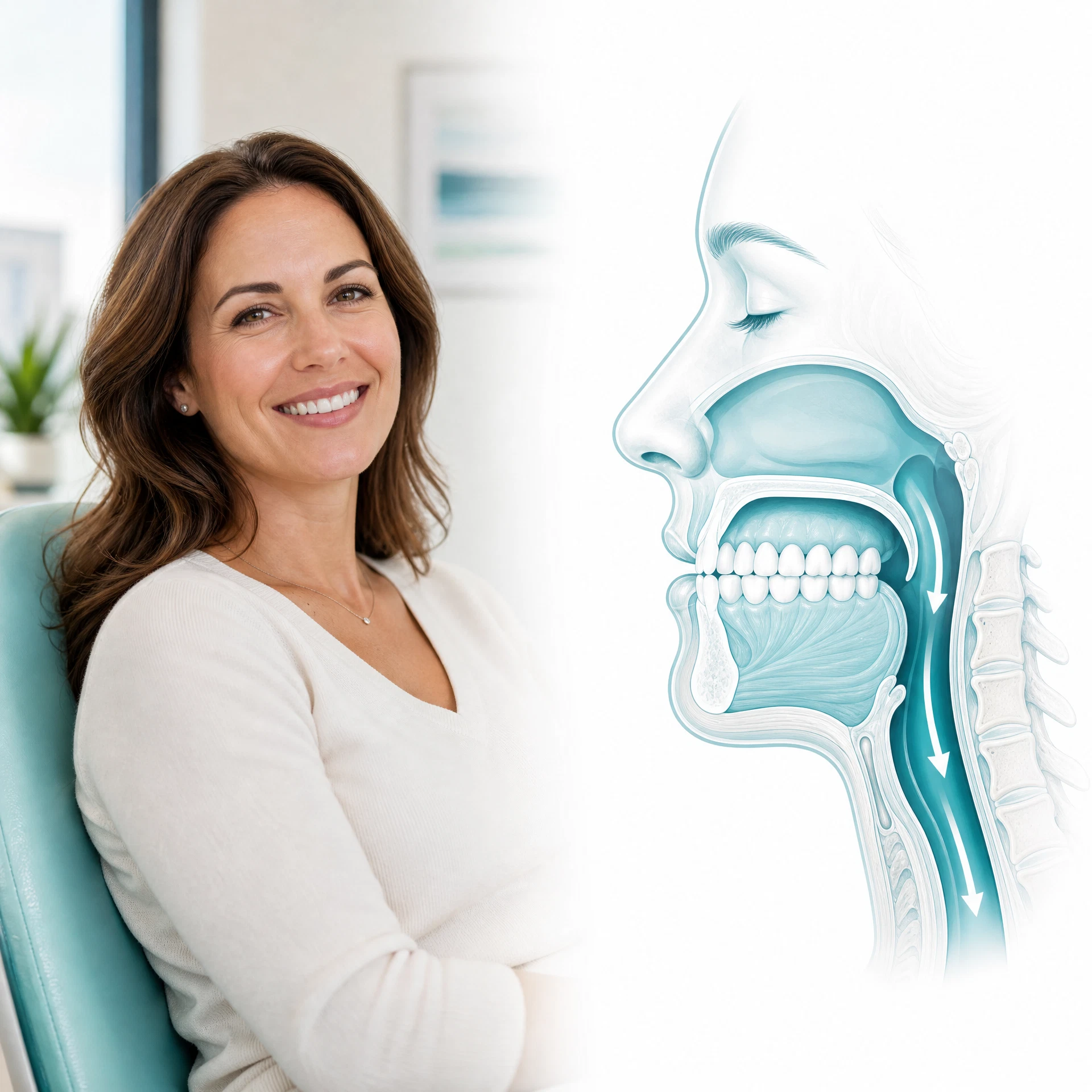
Our ancestors had broad jaws, straight teeth, and open airways — without orthodontists. Modern processed foods require far less chewing, causing jaws to develop more narrowly than they should. The result: crowded teeth, narrow airways, and a cascade of health problems.

The airway dentist on the Main Line treats this root cause directly — using palatal expansion, myofunctional therapy, and non-surgical protocols to grow the jaw, open the airway, and improve whole-body health.

Crowded Teeth

Insufficient jaw space forces teeth out of alignment

Sleep Apnea

Narrow airway collapses during sleep, blocking breathing

TMJ Pain

Misaligned bite places chronic stress on the jaw joint

Mouth Breathing

Narrow nasal passages force the mouth to compensate

What We Connect You With

Airway Dentistry Services on the Main Line

From pediatric early intervention to adult sleep apnea solutions — the specialist covers the full spectrum of airway-centered care.

Pediatric Early Intervention

Early airway intervention addresses breathing and structural development issues in children under five, using minimally invasive functional trainers before problems compound.

Learn more

Airway Orthodontics

Airway-focused orthodontics grows the jaws and face up and out — creating balanced facial profiles, beautiful smiles, and healthy airways — rather than simply straightening teeth.

Learn more

Adult Expansion

MSE (Maxillary Skeletal Expansion) and MARPE are advanced non-surgical protocols that reverse upper jaw deficiency in adults, opening nasal passages and improving airway volume without surgery.

Learn more

Tongue-Tie Release

Tongue and lip ties are real structural conditions — not a social media trend — that restrict oral function and can trigger a cascade of developmental problems if left untreated.

Learn more

Myofunctional Therapy

Myofunctional therapy is exercise-based treatment for the muscles of the face, mouth, and jaw — similar to physical therapy — that corrects tongue posture, improves nasal breathing, and eliminates harmful oral habits.

Learn more

Sleep Apnea

The airway dentist on the Main Line offers CPAP alternatives and oral appliance therapy for adults with obstructive sleep apnea and chronic snoring — treating the structural root cause rather than managing symptoms.

Learn more

TMJ Treatment

TMJ disorders and chronic jaw pain are frequently caused by structural imbalances in the bite and jaw — issues that an airway-focused dentist is uniquely trained to address at the root.

Learn more

Palatal Expansion

Palatal expansion widens the upper jaw to create space for teeth, improve nasal breathing, and maximize airway volume — with both removable and fixed options for children and adults.

Learn more

Pediatric Sleep

Children spend up to 60% of their time asleep — poor sleep quality affects learning, behavior, immune function, and growth. An airway-focused dentist identifies and treats the structural causes of sleep-disordered breathing in children.

Learn more

Functional Dentistry

Functional dentistry views oral health as inseparable from whole-body health — addressing the root causes of breathing, sleep, and jaw dysfunction rather than treating isolated symptoms.

Learn more

CBCT Imaging

CBCT (Cone Beam CT) imaging provides a three-dimensional view of the airway, jaw, and facial structures — giving the airway dentist the diagnostic precision needed to identify structural causes of breathing and sleep issues.

Learn more

Oral Appliances

Oral appliance therapy provides a comfortable, effective CPAP alternative for adults with obstructive sleep apnea and snoring — using a custom-fitted device to advance the jaw and open the airway during sleep.

Learn more

Recognize These Symptoms?

Many people don't realize their symptoms have a structural, treatable cause. Take our free 60-second assessment to find out if an airway evaluation is right for you.

Snoring
Mouth Breathing
Teeth Grinding
TMJ Pain
Chronic Fatigue
Crowded Teeth
FAQ

Frequently Asked Questions

What is airway dentistry?
Airway dentistry is a whole-body approach to dental care that addresses the structural root causes of breathing, sleep, and jaw dysfunction — rather than treating symptoms in isolation. The central premise is that many modern health problems, including sleep apnea, TMJ disorder, teeth grinding, and chronic fatigue, originate from an underdeveloped jaw that restricts the airway. Research published in the American Journal of Orthodontics and Dentofacial Orthopedics has shown that craniofacial structure directly influences upper airway volume, and that narrow palates are strongly correlated with obstructive sleep apnea severity. Airway dentists use non-surgical techniques — including palatal expansion, myofunctional therapy, oral appliance therapy, and airway-focused orthodontics — to grow the jaw, widen the nasal passages, and restore proper tongue posture. Unlike conventional dentistry, which addresses teeth in isolation, airway dentistry treats the face, airway, and bite as an integrated system. The goal is not just a straight smile but a structurally sound airway that supports lifelong health.
How do I know if I need an airway dentist?
The most common indicators in adults include chronic snoring, obstructive sleep apnea (especially CPAP intolerance), TMJ pain or jaw clicking, teeth grinding (bruxism), chronic morning headaches, unexplained daytime fatigue, and crowded or crooked teeth. Mouth breathing — breathing through the mouth rather than the nose during the day or night — is one of the strongest single indicators of an airway problem. In children, the signs are often misattributed to behavioral issues: look for mouth breathing during sleep or at rest, restless sleep, bedwetting past age 5, dark circles under the eyes, difficulty concentrating, ADHD-like behavior, and slow growth. The American Academy of Sleep Medicine estimates that up to 30% of children with ADHD diagnoses have an underlying sleep-disordered breathing condition. A CBCT (cone beam CT) airway scan can objectively measure airway volume and identify structural restrictions. Our free 60-second assessment is a starting point — it helps identify whether an airway evaluation is appropriate for your specific symptoms.
Is airway dentistry covered by insurance?
Coverage depends on the specific treatment and your insurance plan type. Oral appliance therapy (MAD — mandibular advancement device) for diagnosed obstructive sleep apnea is typically covered by medical insurance, not dental insurance, because it is treating a medical condition. Medicare covers oral appliances for sleep apnea under DMEPOS (Durable Medical Equipment) when prescribed by a physician. Many commercial medical plans (Aetna, Cigna, UnitedHealthcare, Independence Blue Cross) also cover oral appliances when a formal sleep study confirms a diagnosis of moderate-to-severe OSA. Palatal expansion for children may be covered under orthodontic benefits when medically necessary. Myofunctional therapy coverage varies widely. The most important step is to get a formal diagnosis — a home sleep test or in-lab polysomnography — before pursuing treatment, as this documentation is required for insurance reimbursement. A qualified airway specialist can help you navigate coverage options, obtain pre-authorization, and submit claims to the correct payer (medical vs. dental).
What is the difference between airway orthodontics and traditional orthodontics?
Traditional orthodontics focuses primarily on straightening teeth after all permanent teeth have erupted, typically in adolescence. When there is insufficient space, conventional orthodontists often extract premolars to create room — a practice that has been increasingly questioned in the research literature. A 2020 study in the American Journal of Orthodontics found that premolar extraction orthodontics was associated with reduced posterior airway space and increased risk of sleep-disordered breathing in some patients. Airway orthodontics takes a fundamentally different approach: instead of removing teeth to fit a small jaw, it expands the jaw itself — growing it forward and outward to create space for all teeth while simultaneously increasing airway volume. Techniques include palatal expanders (both removable and fixed), Homeoblock appliances, DNA appliances, and functional jaw orthopedics. Airway orthodontics is most effective when started early — ideally between ages 5 and 12 — because the palate is still malleable. The result is not just straight teeth but a broader smile, improved nasal breathing, better facial development, and a structurally healthier airway.
How do I find an airway dentist on the Main Line?
Finding a qualified airway dentist requires more than a standard dentist directory search — airway dentistry is a specialized focus that requires additional training beyond dental school, typically through organizations like the American Academy of Physiological Medicine and Dentistry (AAPMD), the American Academy of Dental Sleep Medicine (AADSM), or the American Academy of Craniofacial Pain (AACP). Main Line Airway Dentist is a direct referral service that connects patients across Wayne, Bryn Mawr, Ardmore, Haverford, Villanova, Berwyn, Malvern, Paoli, Radnor, Newtown Square, and surrounding communities with a qualified, credentialed airway specialist in the area. The referral process is straightforward: complete our free 60-second assessment, describe your symptoms, and the specialist will contact you directly to schedule a consultation. There is no fee for the referral and no obligation to proceed with treatment. Call (610) 989-7548 or use the form on this page to get started.

Continue Your Airway Health Research

Use these evidence-informed pages to compare symptoms, treatment approaches, and local referral coverage.

Ready to Find Your Airway Specialist?

Connect with a qualified airway dentist on the Main Line. Free to patients, no obligation. Takes 60 seconds.

Ready to breathe better? Connect directly with a Main Line airway specialist today.